
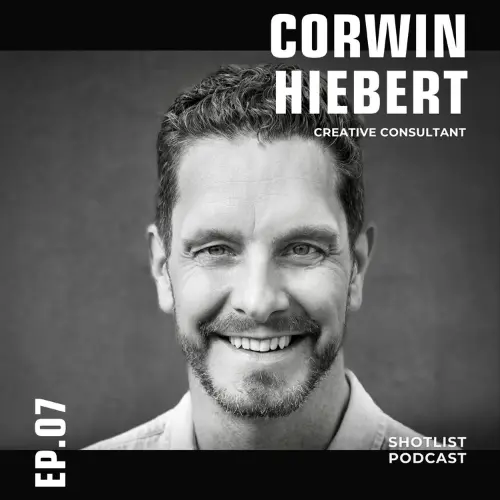
Episode 7 · January 24, 2023 · 48 min
Corwin Hiebert | Creative Consultant
with Corwin Hiebert, Creative Consultant


If you're just starting your creative career and want to get the business basics right from day one, start here.
Corwin is a creative consultant and business expert. We talk about what it takes to launch a creative career, how to actually start making money from your craft, how to create demand for your services, and the bad business habits to avoid early on.
Key takeaways
- Treat it like a business from the start. Launching a creative career takes more than skill. Corwin covers the basics most people skip.
- Make money from your craft. He shares practical ways to start earning, not just creating.
- Create demand. Don't just wait for work. There are ways to build demand for what you offer.
- Avoid the early mistakes. Corwin points out the bad business practices that hold new creatives back.
Connect with Marshal
More episodes like this
Transcript generated automatically, with names corrected. It may contain small errors.
Hello, and welcome to the shop. This podcast where we talk about how to make a life in a living behind the lens, I'm cinematographer Marshal Chupa. And today, I'm sitting down with corn, Hebert, corn is a business consultant and creative industry expert and this episode, we'll be exploring questions such as how to get your career started. As a creative, how you actually start to make money from your craft, how you generate demand for your services and some bad business practices to avoid the beginning. This episode is geared for those just getting started on their journey and hope you can find a few small nuggets to help you along your way. Let's jump into it. Well, hello Corwin. Hello. Welcome to the SHOTLIST podcast. Hey June, thank you. I'm doing awesome. Well for those re listening, I just want to give you a brief introduction on how corn and I know each other I think we've known each other for perhaps a decade. Now I'm not sure.
Does that sound right? I think so. It's been forever. Feels like forever feels like forever originally. I had read his book a put out called, living the dream, putting your creativity to work and getting paid and that was in my younger years. I was still trying to figure out how to make a life in the living from this creative passion. I have for behind the lens and honestly that book really did help me in my younger years. Thanks so much for writing it. As I flip through it here on my desk there's just tons of highlighted sections and it was after they finished reading this book that actually reached out to you and that was kind of what started our friendship mentorship and where we are today. So thanks for getting that. Yeah. It's always nice to know someone read something that you're right. But when you, and I I first connected, I think it was over a over a pint somewhere on some patio somewhere. It was so cool to see your passion and energy for your craft and for where you wanted to go. And now all these years later, it's just it's so cool to see how driven and focused and hopefully creative you are. So it's a cool stuff man.
I appreciate that. And I appreciate your mentorship over the years. I think you've been someone who I can reach out to, in times. When it's like, oh man, I have no idea what to do. About this client contract or something like weird with quoting something or just like, need a buddy to talk about the creative struggles with over a coffee, or a beer. And I think over the years, we've even gone to the extent of I think we called them think and drinks, or what would we call those? Yeah, I called them thinking drinks. I'm not sure what you called them. Yeah, I don't drink as much. I don't drink that much. That being said, I mean, like there's one particular one that stands out to me when you came out to Squamish for a few days. And we indulge in a little bit of Adventure into the lake. Do you care to tell that story? Oh my gosh, that was fantastic. So yeah, for all you listeners out there Marshal and I were just gonna get together for 48 hours, to do some scheming, some work, planning some strategy work and kind of look at our both of our work efforts and sort of speak into each other's lives and businesses and just be encouraging and bring some stuff to the table for each other. So it was a collaborative activity. So my idea of that Like all right laptops and sticky notes, and white boards and checklists.
And let's pull up the calendar and I kind of nerd it out a little bit. And, you know, later on in the times, like, Okay, Marshal takes over as I. All right, now, it's my turn I'm in charge and see you in the morning at 6 a.m. So I wake up to a wetsuit being thrown on my bed is like you're going to need. This will pick up coffee along the way. I like gosh what we doing 45 minutes later were floating in an ice-cold Mountain Lake. Drinking coffee out of thermoses. And he's like, okay, now I can tank and start to sort of slowly percolate and kind of unload the things that you're mulling over and sweating about and chewing on and dreaming about him. That was the way you were you needed to be outside. So that was it was a definitely a memorable think and drink business session.
Yeah, I mean, why drink coffee in a warm coffee shop when it could be, you know, floating in a lake in a wetsuit. I mean exactly. Much better. So I wanted to kind of dive into. I think something that stood out to me in the past and that fact I'm going to start with a little bit of a story here is I just got back from Toronto, I was shooting there and we were put up in a bit of a fancier Hotel, downtown Toronto. And the valet who was actually helping us unload, our gear, we had one of those fancy gear cards. And I had a, my red cameras on there and Gimbels and all that fancy equipment. And we pull that out and the valet his name is Tristan, he was Is so excited. He just, you know, as we came down he just likes all the gear and he was just like, wow. Like you guys are living my dream and it was just like he was so lit up and inspired and I just saw myself in him and through his eyes myself 10 years ago and I thought hey you like we happen to have the day off the next day so I gave him my number and just said hey if you have any questions let's let's chat and you know the next day we went down near the water and he was so lit up and inspired and passionate about I think directing and writing was his thing but he didn't even really know that.
I think you just was kind of spewing about like all the things that he was excited about. And I said, hey, like, you know, I really think directing and writing is your thing. You need to focus on that. And after that conversation, it just left me feeling like reminding myself of like what it's like to know you want to do something and you have a passion for something, but you don't know where to start. And I love to just kind of dive into that side of things for those who are just beginning their journey and wondering where to take things where to explore, how to meet people, where do they, where do they go? And begin because I think that was something that really stood out for me because he had the fire in his eyes, but it's just like, he didn't know where to start. I know you've worked with a lot of creatives over the years, and you've seen this over and over, and I'm just curious, maybe some of the things that you think are the first steps or maybe something you can stab at to help someone get started.
I love the story. I love, you know, those types of connections, they shape us as humans. And, you know, for Tristan that was his name. I mean that that conversation will shape his journey and clearly a If yours too because you feel like the opportunity to contribute and support and Inspire and encourage like these are important human moments that the creative Industries relies on. We all need that type of feedback. We need that inspiration and that feedback loop to help us become who the best creative as we can be. And when I with all of the talent that I've been around and, you know, some of which I've supported and managed or whatever others have just been associated with or worked or collaborated with it. It's the creatives that do versus talk that are the ones that are figuring it out the ones that are steering, a moving ship and they're making along the way when I've come across photographer or cinematographer want to be and they sort of for example like I really want to do this kind of work and okay, that's great show me. Show me that you're starting to go down that path. Now, met a photographer who wanted to be in the fashion industry and there were young and energetic and excited. Oh man.
I'd love to see your portfolio. And it was there was like one picture of a girl in a dress and the rest of the body of work was like other stuff. And I'm like, okay, cool. Like listen, you're excited with the fashion industry, that's great, he's got to fill your book, you know, you got to do more fashion work and and your spindle just replicate what you see are people doing like try to push the edges and just do like just keep making never stop making his enthusiasm was so Ali inflated that he was like, I'm going to work for Vogue within two years and I know you're not you're really, really not but just keep making. Like, don't that's great. You know, you can have that aspiration. I don't want to get in the way of that but just keep making. So, for those that feel like they're at the beginning of something, just, you know, grab the camera and make stuff and your portfolio gets better over time.
The worst portfolios are the small ones. If, you know, you should have A problem. I really gotta have to curate, my portfolio, it's too big. It's too bloated, is too much of one kind of work, or what kind of aesthetic, or what kind of approach or kind of story, I need to diversify. It's a great problem to have the worst portfolios are the worst. Like the, I think the most struggling creative, it's just the ones that just they're not doing their talking and no one cares. No one's going to hire a talker. Yeah, I totally agree with you, okay? So let's just say, you know what you want to do Do not allow your photographer videographer, you could be a director, right? Or whatever that is. So you know what you want to do? How do you actually start making money from it? Because I think that's always a tough question and a lot of people in the beginning just to have no idea or even the possibility that you can make money. And I remember in my younger years, when I did realize you can make money at making images.
I was like, are you kidding me? This could be a career path like you know, blew my mind and then it was the journey from then on to figure out how to make a life in the living from it. What do you think some of the first steps are for Creatives trying to like understand where they can start to make any sort of income or get started. It is always for everyone's path, is a little bit different, but some of the foundational pieces are that you have to establish yourself as a business, and sometimes that's just a mental framework. It's not like, you know, some legal document or whatever, it's just treating yourself, you are an artist. You are a maker as a creative for hire. You need to think of yourself as well. How much time can I dedicate to this? Craft, how much time can I dedicate to other people's projects? What is a fair market rate for someone of my skill level and someone of with my background or portfolio or whatever it is, you know, that I feel like I can charge and you kind of have to put some stakes in the ground, it kind of say, all right. Well, I feel like I can dedicate half of my week to this work and the other half I have to do other jobs to pay bills. And just on that note, I could care less for when a creative To me and if they have some rambling story about how they work at Starbucks to pay the bills, but this is who they really are.
I could care less about Starbucks. I could care less how they pay their bills if they're creative to be creative, do creative work, we show creative work. Talk to people like you are a cinematographer, you are a photographer. That's who you are. And it is relevant to the world, how you pay? Some are all your bills, so just be confident that. But when it comes to kind of those first few steps is like, you know, you gonna have to ask around. You got to have to Do a little bit of market research, a little bit of like, well I really like to do this type of work and it's some of these people seem to be making, you know, some amount of money that you have to Marshalls. You know, sometimes you just have to go and ask questions and be the dumb person in the room and takes a photographer out for a beer or coffee and just say, you don't kind of pick your brain. Like what do you feel? Like if you were me starting out what would you charge? You know, you have to ask those questions.
The answers are different based on which category or industry or sector, or which town you live in. In or what country you're in, like, there's always variables. There's no, there's no cookie cutter but certainly feeling like you can get to the point where you can say a number. If I'm not a big fan of it, but if you feel like it's an hourly number then it's an hourly number. If you feel like it's a day rate, it's a day rate. If you feel like hey this project for me, you feel comfortable talking project terms that have a project rate, what matters most is that you are saying numbers out loud. In connection to the creative gift that you are giving the creative service that you are offering potential clients. And it's just getting comfortable talking about just enough Mass to the point where you feel like you're going to do creative work and you're going to get paid something for it as you grow and as your business gets, you know, as some more clients and more projects, you can steer those numbers and you can get increase them. And you can, what really matters is that? Can you sell the rates that you That you're worth and that your talent can offer.
So it's always about sort of momentum and just pick numbers that you feel confident. In that, you can say aloud, if you say my day rate is twelve hundred dollars a day and if that day is 8 hours or 48 hours and makes that 23 hours and pick some numbers growing, it doesn't matter. And you just say this is what I'm comfortable doing. And you can say that you can say that number and then you can literally shut your mouth and let them respond. You can say that with confidence that is worth more than what the actual number is. You'll figure it out. It takes time and it takes you have to learn but it's really about momentum. Just pick some numbers. Dedicate some time and make yourself available, like let people know that you're available to do work for them that you're available to help them bring their ideas, their Charities, their businesses, their products, their campaigns, whatever it is to life. Yeah, I remember the saying you are, Worth as much as you can, say, out loud.
And I found that it's a funny thing but like, you know, as you're starting out your few hundred dollars in the beginning, feels like, wow, this is a lot of money, you know, and then all of a sudden you're saying oh, I'm 500 a day. And also interesting 1000 a day and you're like 15 and it just keeps going and honestly it has to do with I think confidence level and it really has you are as much as you can confidently say out loud but you're obviously your work has to relate to that number and I think It just kind of comes naturally with time. For those of you are trying to wondering like when do I up my day rate and those kinds of things? Like, I mean, when you look at your work and you compared to your peers like you know, where are you at? What are they charging? I think it's always this funny. Question of like, can I ask what you're charging to your friends and around you? And it's never like a comfortable conversation.
But I think, you know, if you get enough General census of what's going on, I think for in the beginning, it really doesn't matter. I think building your portfolio is much more important in the beginning, then figuring out the exact day. Obviously got to make a living in life and gotta put food in your mouth, but I think it is later on that you learn that you can charge big numbers and I think that's the exciting part with this career is that there's so much room for growth in the rate and it is pretty cool. Once you get five or six years into it to be thinking, wow I can charge like two thousand dollars a day to like show up and shoot what I love like that's an incredible thing. Well and that's just it you just said five or six years and that's where a lot of emerging Talent they kind of feel like they should be able to To pull that off really, really fast and get there a lot faster, some do every now and then, I come across some of those like, oh my gosh, you kind of catapulted I had, but they're rare. And the majority of creatives just sort of they work, they build, they work, they build they failed. They struggled to get job at Starbucks. Again they go back and it's just, it is part of the struggle but it's an important one.
And I just want to highlight that just some kind of a guiding principle when it comes to that very question. Like when do Raised my rates. Or when do I adjust my rate? A good principle is if you're selling sort of like, you're pitching to a prospect saying. Well, this is my, let's just take the day rate option. So if for every 10 times that you say, your day rate and you lose the job, if you lose like 70, 80 percent, or 90 percent like a big number, like you're losing a lot of opportunities, and you feel that it's because of your price point. Then you're like, well for my market for the people That are paying attention to me for the types of conversations. I'm having, I'm not closing enough of these, I probably need to lower my rate so that I can close more of these. If I'm winning whole bunch of business and I'm closing 70, 80 90 percent.
It means that, you know what, I can probably increase my rate because I'm in demand. People are accepting, I'm not having to negotiate a lot. I can probably afford to increase my, right. Maybe I might lose a couple more opportunities, but it'll all work out in the end. I'll get paid more For doing your projects that's ideal. So there's this sort of buffer where you kind of want to be winning and losing just enough. So that you feel like you know, your rates are fair, you confident in your rates and you don't feel like you have to question the question them when the extreme start to kick in? Yeah, totally agree. That's a great way to look at it. What are some of the obvious things critics aren't doing in the beginning? You know, there is nothing to struggle with figuring out in the beginning but what are some of the other obvious stuff that you see, whether that's It's the business or the networking or the marketing side that really stand out to, you know, you've worked with a ton of creatives over the over the years. I'm just curious what are some of the obvious ones that maybe people should pay attention to more in the beginning when they're getting started out?
It really comes down to that, Outreach activity. What are you showing? And who are you connecting with in order to build your career? So let's focus on the showing for a second. Really think it's important for creatives to be showing their work as much as humanly possible. And I really like, Bite-size pieces. So if you've got a really cool project, maybe it's a body of work, maybe a collection of 30, 40 images, share one a week for a short film or video Project Share 5 or 10 seconds. Snippets of it, you know, a few different Snippets over the next little while and just don't just show it, like, talk about it. Like, whether it's something behind the scenes or something about the creating of it, or an experience, or feeling you had, well, I'll making it or in a reaction that you got from someone that seen it really pull people in pull people in, in such a way that they want to engage with you. They want to ask questions, they want to learn more, they're excited about the next week to share. So probably the extension of that might be kind of sounds like I'm talking about Instagram. So maybe I am talking about sharing that on Instagram but maybe it's just about it being on your blog and being available.
But truth is people don't go to blogs unless they're told to go there. But the idea of just sharing Get your work out there and for now I think Instagram is a great place to do it. And on that note I also think LinkedIn is a great place to do that. I think the biggest opportunity I see right now online for Creative work to be in a place where there's potential prospects and buyers and it's linked in there are very few photographers and cinematographers that are sharing their work well, on LinkedIn. It's an opportunity and that's where art directors. Date of directors and business decision. Makers are spending time, believe it or not, for those of you that are not on LinkedIn, you probably think it's like monster .c. Ate some sort of job site. It's not, it is a business community, and it is a very positive one. There's very little nasty stuff on Lincoln's, really positive, encouraging.
People are looking for ways to celebrate and sort of support each other. And creatives are not sharing very well on that platform. And I think it's a great way. To tag a few people to highlight some work to do it regularly. I think the LinkedIn algorithms are very favorable for organic content and it just have to be sharing your work in order to get those touch points in order to spark those conversations. The second thing is about Outreach like how are you going to connect and build? You have to build a network because people work with people, they trust, I hear this all the time where someone gets all pissed off because I got that Egg because he knows somebody of course he got the gig because he knows somebody people like work with people. They like people like to work with people they trust and that takes time. And it takes relationships, so you should never be if you want to emulate.
Anyone, emulate the people that are building a good Network and working on relationships and that's not done through a sales Mo, that's done through celebrating other people's successes that's done through being kind and generous and supportive and sharing other people's projects and other people's. X and other people's initiatives and being a part of a conversation. Especially if you can focus on if possible a niche in, if you get excited about Adventure Outdoor Activity, or food, and beverage, or health, and wellness, or Fitness, if you don't have to be a specialist but you have to have some area of your life where like no, these are my people. I really like being around these types of people than follow them, engage them, don't just hit thumbs up and hearts on stuff like leave. Comments be supportive, really?
It's your relationships are what will matter when it comes to Opportunities, your work will only get you so far and you have to reach out and goes for events to like, put yourself In Harm's Way volunteer at events, attend events work as a volunteer with your talent for an event organizer, who's doing a charity thing. And just so, you know, I'll come and shoot some footage for your, you know, your Instagram profile, or whatever it is, just be around people. I think that, and That's right. This is a long Soap Box on my gosh. I listen to myself, talk is exhausting doing great. The last thing last thing was going to say on this subject is creatives. Have a tendency to hide behind their devices to hide at their editing. Suites to get stuck thinking that they're being productive and working hard by sitting in front of Lightroom, or adobe Premier insert, you know, digital product here but they just they spend way too.
Way too much time in front of their machines, you have to be out with people, you can only do so much. I know we live in a digital world and we're all especially, you know, with covid in there. Hopefully, in the rearview mirror but nonetheless with all was going on the last couple years. You know everyone feels pretty wired. First off the pendulum is going to swing analog in person. Non-digital activity. I think is going to become increasingly, exciting for people and I think that the best Is out there going to be the ones that have built relationships with people and that's offering to take people for lunches, dinners beers coffee. It's attending events and supporting charity activities. It's being in the real world, and you can't just hide behind your Adobe suite. Yeah, 100% agree. I think if there's anything I've learned in my journey as far as that relationships are, what matter the most, and I think that's something they don't teach you in school. I really wish they did, but just how it is, and Also, I think on that note just adding value into other people's lives. It really is instead of showing up in saying like hey how can you help me?
I think it's a pretty common thing. Maybe I did in the beginning or maybe others might do is just kind of reach out and say said production or said photographer like hey, how can you help me? Like I'm this is young guy struggling or just do. Can I join you on? You know, this thing that sort of join you on your shoe? Like can you instead of approaching it like that? What about if you said like hey can I shoot some behind the scenes for you? That you can later post on your social and then putting your next client email that helps like your marketing Endeavors. Something like that. I think kind of approaching it from adding value perspective, I found that pretty helpful along my journey. I think it's a great way to approach it, and you're right. A lot of people, those that are little later on in their career, more successful. They get pursued a lot. They get offered, like, I want to be your assistant or a help, you carry your gear or whatever, which is the sentiment is nice.
But the reality is that At adding what is basically a perfect stranger to a production? You not looking for more variables Marshal, right? Like you're when you're on set you're not looking for you know to have someone that you've never met before holding a light stand. Like, the reality is you need to work with a tight crew that you know, and trust. And that can be led really well and do what they're told and it takes a little bit of time for that to build up with the people that you're collaborating with, or if they have really little to no experience, then they're, you know, they're maybe not quite at that level but adding And being contributing Force versus just sort of a helpful. You know. That. That's a good way to approach it. I like the idea. Yeah, I wanted to die back a little bit into maybe a little funny story. I know about you, that's the Fishbowl story, but at least Creative Marketing is kind of the road. I wanted to go down and for those of you haven't, I don't even know if you've read this book horn, but it's called Blue fishing.
It is a little bit about taking the creative side of what we do in life and reaching out to people. On the same kind of matter, we're talking about finding unique ways to add value in people's lives and get two unique places through unique Endeavor. So I love the you to tell her that Fishbowl stories. I feel like that is kind of hits on like for me, that is what blue fishing is in this book. So yeah. Well and want to preface this story by saying that what worked then wouldn't necessarily work now. So there's always context and you know timing relationships and there's never one thing that works necessarily but in my case, I owned and produced a conference called creative mix. And it was it preceded. The days of tedx and all that kind of stuff. It was it was early on in the world. Actually, I was 2009, was the first week we hosted It produced it, it was an event where we wanted creatives to talk about ideation and collaboration.
And we also had an exhibition where creative groups schools, Could showcase their creative Endeavors. And it was a really fun mashup, really great event. We loved it, we needed press, we needed to sell tickets, we needed to get some attention, we needed to make sure that this event came off and no one was really doing that at that time. So it was sort of like a people didn't really understand what was that we were trying to do. So we knew we needed some publicity. So I knew for a fact that if I just sent a press release through the usual channels that no one would read it, I was emailing Gatekeepers. I wasn't going to get anywhere. And so I knew that I needed to make a Mark. We're in Vancouver. When it came to Vancouver media, I knew there were really only seven Outlets that made sense for us.
And so I knew which seven people at those media, Outlets were the most important to connect with. So we took a press release. We made it as concise as possible. We laminated it. We put it on the back of a small fish tank and inside the fish tank, we put a small all fighting fish. On the back panel was, was the logos for a branded. The back of the fish tank where it said, creative mix and it had the hello. My name is sticker, and we named each fish and we hand-delivered these fish tanks. Two major media Outlets TV film, television course. The problem is, when you're driving around town with some some fish tanks in the back things, get a little slushy. So we were driving like three kilometers through downtown turning Corners like the oldest people in The universe trying to not spill.
So we would show up at like that the reception area of a major, you know, newspaper and I set down this dripping fish tank with a fish that has the like, I'm topping up the water with a water bottle, right on their receptionist's desk. And I'm like, oh, this is for Dean, can you, please make sure that Dean gets this secretary looks at me like, you know, I'm the most insane person that has ever met, but I'm like, if I'm going to send a press release, which I had never done before, I'm like, I'm going to make sure it's memorable and So we did that and we ended up getting great coverage. We were on local television with it and got a handful of interviews and of those seven relationships, five engaged with us and helped promote the event. And it was I swear was because the stupid fish was sitting on their desk, probably leaking all over the, you know, the faxes that they just got that Day, created a great memory, a great moment for people that it stood out. So so there's the story, I'm not quite sure what the principle is other than the fact.
That you have to do things differently. You know I was with creative director wants time sitting in his office and a photographer had shipped him by FedEx. A beautiful portfolio book. Like the biggest most amazing portfolio book I'd ever seen glossy. Shiny was it was a May probably cost them hundreds of dollars. If not why it cost him a fortune to make it and the creative director took the book. Look at it, dropped it onto a pile of all the other collateral that That people send him and I don't know if he ever looked at it ever again. So here a creative things that this is their most amazing creative way that they can show their work and the creative director who they were trying to get the attention of did not care. So you have to cut through the noise. You have to approach your ideal clients in ways that they're not expecting.
You have to pull a wild-card move and just be like, I'm going to do this differently and it's okay to make mistakes if you're going to do it weird, do it weird, you know, change. Later. But just you have to be creative if emailing someone a link to your portfolio. Yeah, that's not creative. That's not going to cut through anything. Yeah. 100%. I love that story. Just for the creativity behind it. Let alone, you know, just in itself. You're writing sending the 8th email is just what everyone else is doing. And the finding fun clever ways to connect. I think that's like huge part of some, of my success. And, you know, I definitely encourage younger. People just trying to figure out how to connect with the right person, just that unique about. It get personal about it. Sometimes that is just doing a little bit of research on them, or, you know, or doing something that's just really you, for example. Okay, here's you see, you have to be careful. I have to be careful creative ideas, pop into my head sometimes and they're usually the worst ideas, but I believe that bad ideas lead to good ideas. But if you love socks and your into cool, interesting. Funky-looking socks, then make custom socks with like from images, from your portfolio.
And send someone socks and say I put my 3 favorite cinematic projects stills from my cinematic projects on these socks and I thought you would get a kick out of it. I'd love to work with you one day. Catch you later, and it's just because you love socks. Maybe it's not. Maybe you love cool, mugs or camping, gear or motorcycles, or you love knitting. I don't care what it is but you find some way to just make something that's interesting. That's quirky, hopefully useful. I'm a big fan of Will things versus things that just get thrown in the garbage or just people hate that the fact that they have them on the desk or that they feel obligated but just do something different. If that's one of the challenges. I think emerging Talent have when they're in these industry events and their hearing, oh, Bob was successful.
And this is how he did it and then everyone does that, right? Everyone goes to the name of it now agency access and their carpet bombing email or they're hammering paid ads on Shawl or their, whatever they're doing, they're doing because that's the way someone did it at some point and was successful look into other Industries. Look at other people look into just like, literally sweat and bleed, the weird stuff, and the odd things and the quirky things and the things that are really like this is funny or interesting or weird or awesome. Really push that envelope when it comes to getting attention for your work because this The Usual Suspects, man, just the worst. Yeah, I agree. So make socks. That's that makes take away, their makes sense. I mean cork when told me that absolutely custom socks. So here we go, here we go, everyone's gonna do it, I'm gonna be worth it.
There's something about the human connection aspect of like to dive into and I think one of the assumptions and least that I made when I was younger is that you want to work for the North Face or the Nike or the Lululemon or whatever it is and you just really have no idea how to get there and I think One thing that I've learned is just trying to break down, you're not actually working for the North Face or the Lululemon, you're working for Tom, who's the marketing manager? Who then hires said photographer, or videographer, or because cinematographer director, mostly whatever it is, I just left you to dive into a little bit about like, how important it is to understand who your target market is. And then to take the human aspect into account when dreaming of working for the Nikes or the or the loo Lulu's, I hear a lot from creatives to that.
They aspire to work with some of these iconic Brands. I think it's really important to remember that Brands like that represent like the top one percent of businesses in any category. So the idea of working for a Patagonia or North Face or insert cool. Expect mazing brand here. It emerging Talent needs to focus on the local manufacturer or the more Coachable equipment maker or brand in their category that is small and that they're also a start-up and that they're trying to get traction. And that they, they also are aspiring to compete with bigger Brands but they're not there yet and making your services making your portfolio. Maybe the aspiration is to work for the big Brands but you have to be approachable in such a way that you can build up to that. So just imagine the art directors or chief marketing officers of these larger brands that they get hammered. They're not getting hammered by every photographer and cinematographer.
They're also getting hammered by every agency, that it's out there who has a huge roster of talent at their disposal as well. So it's really important to start small and build from there. So that one day when someone of note in a category industry that you're really excited by looks your portfolio. They can look at you go. Okay, they know what they're doing, they've done it before. They've done it over and over and over again. And I think they're worth taking a shot on outside of that. It's like, it's got to stay in the aspiration category. I really discourage emerging Talent from overreaching, because it will only discourage you. It will mean nothing to them. The, to the prospect of, you can't even call them that, but to the potential client, they don't, they don't, they don't just dismiss. Miss you and they dismissed dozens or hundreds of people a week, right?
So it won't mean anything to them, but it will discourage you. And he what you need out of the gate is momentum, you need small projects that you can complete successfully and the you feel like you have added value. And that your portfolio is better as a result of it. And if it isn't a portfolio project, which let's be honest. Sometimes not every job belongs in your portfolio. It's just about getting paid or practicing or building the A honoring a commitment or helping a friend, you just do the work and you just keep going. Yeah, I think that kind of leads into what I was hoping to chat about. Next is kind of like doing it for the love or for the money and I think this is always a question that comes up for me and I think it was maybe Dave Downey. I was having this conversation with him and he's told me about the triangle of decision making when it comes to taking a job or not. And the three things that were mentioned were, is this going to end up in your portfolio is this To make good money and are there.
Good people and crew, you're working with and if there's two of the three you take it and I think those variables are always changing and shifting but it's something that helps me when it comes to choosing to say yes or no to a job because ultimately every yes you say means you have to say no to something else. So as I move forward in my career more and more finding it important to say no more than yes, because something that's interesting. Yeah, you know, and for the emerging Talent, they have a hard time, Imagining saying no, they're like I would just say yes to everything because it means I get to turn my camera on and go make something but your bang on in that sometimes it is really healthy to say no maybe it's no right now and will be a yes later so it's about timing maybe it's no because you're working on a scale and you're like if I don't finish this course or if I don't finish this program or if I don't finish learning this technique I'm going to feel like I've left something on.
The table or there's usually a lot of factors that go into it, but practicing saying, no I think is important and I think in a lot of my work now especially being on the agency side, where I'm in a situation a lot where I actually have to say. No, I'm sorry, our agency is not a good fit for you. It's not the nicest thing to say, especially if they reached out and they want our help and I'm like, I want to say no right away but I don't, I listen, I pay attention. I am trying to make the human Action. And when the time comes where I need to like take the agency out of the mix, I am looking for ways to still be helpful and still make a recommendation, still make a referral and still be as helpful as I possibly can. So sometimes saying no is really just an opportunity to be helpful in different ways and I do think that we need to look for creative ways to be to be helpful and it's not always to block off a week and do a job. If you don't want to do yeah totally I feel that. I mean just on that same note in the beginning I think yes saying yes to most things is a good thing because you do learn what you don't want to do as well as you kind of like start learning. All the red flags that used to see red flags because you've went through a few experience things. You've gone through things and you've grown. Also, I think, for example, if you're taking a job that is just kind of for the money, so to speak, finding ways to make it. Exciting for you.
Whether that's like literally you get to try one New lighting technique or you know, you get to use a new piece of gear that you've never used, like, find some excuse to make it exciting for you. Even though, you know that jobs is not going to end up in your portfolio, maybe you can use that technique and a project that you do care about in the future. I think that's a little bit of an angle. I've taken myself. Yeah, that's solid really helpful. What are some of the business practices that when someone starting out they should think about? Because I know like her, So many layers to running a business, a creative business that people honestly just don't address in the beginning. One big one. I think and a common theme that I end up helping a lot of my fears with is like, just even having, you know, looking at yourself as a business and having a separate bank account, how to do your bookkeeping, all that kind of stuff.
Like what are some of the things that you know, younger people getting to this should really start to think about in the beginning and build good practices moving forward. Well, that's certainly a zip folder because there's probably four or five major categories that the And that always stands out the most to me, is that you've got to know how to ask for money and to the point where I think, when someone says we want to work, you know, we want you to help us with. They want to hire you in order to secure a project. They need to pay for that time. They need to pay for that commitment. You have to send deposit invoice. I am really, really dead serious on this, whether it's five dollars or ten percent or it doesn't Or what the amount is. There needs to be an exchange of money for you to secure time in your schedule to dedicate your energy and all the things that are going to come, there needs to be a financial commitment. This is a business transaction.
If it is a client who is doing work, is they need your creative talent to promote something to bring awareness to something to sell something, to whatever it is. They're hiring you. So send a deposit, invoice, and say, I have this in my calendar as 10, Of once that deposit invoices, paid a lock, it off as confirmed and go from there. If you're going for without getting deposit, invoices, it sets up the relationship to be lot, adds more variables. As you as we all know, projects get shifted and you know what the degree in which you're willing to be flexible with moving, shoot, dates, or that's just part of the learning curve. And I do think that, as you get older older, as you get more sophisticated in your - that those things become more structure and you can add more layers of complexity and you can have more terms and conditions. You can add those layers but early on it's just about establishing that this is a business transaction you going to pay for my commitment to help you with this project and here's the invoice.
So to that point you've got to be using an invoicing system. Freshbooks is a great example, there's four or five or ten other ones, there's 20 other ones out there. I don't really care how you do it but don't rely on a Microsoft Word or Excel template or whatever, using invoicing system, send that deposit invoice and as soon as they pay it through PayPal or Checker carrier pigeon, I don't care. I like collecting credit card payments because it just, it makes it easy on them. Always making it easy for people to give you money. Never make it hard. But, you know, using a system like freshbooks. Just take some of that initial stress and mystery and Chaos out of the equation. So I think that's foundational. Is it deposit invoices, a bath. Practice. The other thing is, I really feel like you need to be asking people for referrals. And I think early on in a relationship, I think it's important to say, you know, as we get near the end of this project, I'm expecting it to go really well. As we get near the end of the project, I'm going to come back to you and ask.
If you'd be willing to introduce me to a couple people, I will do the homework, I will ask you specifically which people but I would cherish your introduction as we get near the end just sitting there. So that when you ask before or after the final invoice that there. No, oh yeah. Okay. Corwin's going to come back to music and asking for a couple introductions and I'll do that for him. I'll do that for it. So he liked how I roll play with myself. That's all I can is great. Just don't know what I'm doing. I just realized I roll playing all by myself anyway so referrals I think is a really, really important touch point. It's a business practice. Don't think of it as marketing. It's a business practice. It's I have to To ask people for referrals and it is not like, would you please introduce me to your friends? This is like, hey, from what I can tell on social.
It seems like you engage with or chat with or message back and forth with Frank over at X company. Would you be willing to introduce me by email to Frank? I'll send you the email and then you just hit reply all and add Frank would that be okay. That type of thing is gold and that's a business practice that I think emerging Talent need to put into there. Regular efforts. Yeah I love that because honestly there's nothing that goes further than a warm introduction. I feel it in this industry. It's again it comes down to trust and if someone is already putting your name forward and there's just you instantly break down that first wall and that's that really hard wall. So I love that, I love that technique in tip. We're just about to close out here. Corn was wondering if you had any, you know, bigger picture stuff that comes to mind, when it comes to getting started. This podcast, specifically is just kind of the first. Oh those who are trying to get going and not sure where to start.
Is there anything comes to mind that you'd really hits home? Some parting words by Corbin Hebert. Thank you. I see a lot of distraction in the creative Industries with gear. And I worry about emerging Talent, feeling, the pressure to always have the latest and greatest, or the biggest and best. And I can say that, Yes, there have been times where clients have been very protected and I suppose depending on the project, there are very specific technical requirements that require certain types of gear, in order to make it happen. Those are pretty Advanced clients and I was merging it talented, don't often run into that. So, don't put the expectation on yourself, to always have the big expensive gear.
I've had video projects, where I've hired someone with DSLR who just turns it to video mode and they can make. Very, very good video content for what I needed and it was. Yeah, okay. Wasn't 4K or 8K or 228 K and there wasn't, you know, we had to use natural lighting, maybe a little bit of fill light or whatever it was. It was kind of a campy project but you know what? It hit it. Did exactly what it needed to do. It made it. I don't want to know more so you hate it. When I say run and Gun, it's okay. As you can see it was a light setup. It was a pretty simple, maybe a monopod was involved. You know? Saying like it was it was pretty. Really like Tech. But it got the job done and sometimes there are projects, we're just, you're able to just deliver well, with the gear you have or the gear that you can get easily.
And don't let the gear get in the way because when your clients are looking for results and they're looking for, they want to create an impact whether through a campaign or initiative or sales and sometimes they need to take the fastest or the cheapest or the easiest route there and emerging Talent actually. Have a great opportunity to do that when a client contacts an agency and says we need to do something quick and light and simple the agency's brains explode. They're like we don't know how to do that. Our systems are not set up to do that. Whereas an emerging freelancer can do that really well. So don't let gear and that sort of the sophistication of this amazing craft in photography, or Summit ography or whatever, you have to let sort of the gear support the end result. So don't over cook.
Figure. I know that sounds weird, a business guy talking about gear but I just I see this as a potential distraction for a lot of people and it will serve Talent. Well when you just you know use what you have do, the best job you can with what you have rent, borrow beggar steel when you can if that gear will make a difference and you know how to use it. So it's just a cautionary tale that I see a lot of distraction there. Yeah, totally agree. I think getting in your reps are more important than the You use just like in a gym, you know, every time you go there you're going to build more muscle memory and the more sheet to get under your belt and the more lessons you learn. I think that's the most important part at the end of the day. Thanks so much for coming on the show corn. Really appreciate your time today and you shedding some advice on how to get started in this crazy world of freelance. Entrepreneurialism in the living behind the lens and look forward to talking with you again in the future. Awesome.
Thanks. Marshal. Okay. Folks that about wraps this one up. I hope you enjoyed my chat with core and Hebert and maybe took a few small nuggets away to apply to your day-to-day journey and future episodes. I'll be speaking with photographers cinematographers directors, producers reps. And anyone who has decided to take this ambitious leap of faith and making a life in the living behind the lens. Stay tuned, And subscribe to the channel on your favorite podcast app. And if you like what you hear, please scroll to the bottom of your device and leave me a star rating or review, or just drop me a DM and let me know. I heard something of value. Thanks for listening, and we'll catch you on the next one.