Episode 9 · March 7, 2023 · 1 hr 2 min
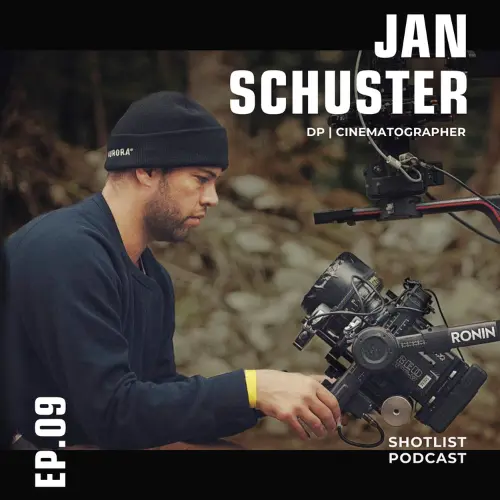
Jan Schuster | DP / Cinematographer
with Jan Schuster, DP & Cinematographer


If you're thinking about buying your first RED or a big piece of kit to kickstart your career, hear Jan's story first.
Jan is a talented DP in Vancouver who's been in the game for over 15 years, starting in the action sports world. Funny enough, we share a pretty similar story about the leap of faith into doing this for a living. We talk about buying his first RED, earning extra income with his camera truck, and getting through slow stretches.
Key takeaways
- A big early purchase can work, with a plan. Jan talks honestly about whether buying his first RED was the right call.
- Your gear can be its own business. His camera truck turned into another way to earn.
- Build a foundation of relationships. Jan shares how he built the network he leans on today.
- Slow times will come. The mindset to get through them is as important as the work.
Connect with Jan
Connect with Marshal
More episodes like this
Transcript generated automatically, with names corrected. It may contain small errors.
Hello and welcome to another episode of SHOTLIST where we talked about how to make a life in a living behind the lens. I'm cinematographer Marshal Chupa. And today, I'm speaking with Jan, Schuster, Jan is a talented DP and cinematographer based in Vancouver BC who has been in the game for over 15 years and originally kicked off things in the Action Sports World In this episode Jen and I dive into what it was like to buy his first red camera and if it was a good career choice when starting out his journey into becoming a successful DP and creating other avenues of income with his camera truck, how we began to build relationships and a solid foundation to lean on with his career and the mindset. It takes to make it through the tough times. When work will, inevitably slow down, funny enough. Jen, and I share a similar Journey story about how we both made the leap of faith into making a living from this career. And it was fun to hear the details of what got him going. And the beginning Jan was very open and genuine in our conversation together.
And I think you will find a lot of value in this chat. If you're still in the beginning, stages of trying to understand where to begin with the whole creative career as a DP or Video Creator, let's Dive In. Well, thanks so much for coming on the show today, John, I really appreciate you coming on. Yeah, thanks for having me. This is my first ever podcast so see how it goes. Yeah, welcome. I was just doing a little research and trying to figure out what title you like to give yourself in a comes to being like a DP or, you know, people like to have director, cinematographer, whatever it is looked in your Instagram and it says Video Creator. I'm curious. What, what do you like to go by and specifically? Lee. Oh that's hilarious. I don't think I've updated my Instagram and a long time. Maybe a couple of years ago. I went by that. Yeah, I guess there is quite a few different names for it. So you could be a content creator or cinematographer or a DP.
I guess primarily would be DP cinematographer. They seem to be kind of one of the same, so yeah, obviously, jobs you're doing where you're doing all the lighting and also the shooting that be a DP roll and then other times Kind of been on the job that I do. I'll be a bee Cam and I'll be a DP who's actually doing the lighting. So I'll do the cam and I guess technically, I would be a cinematographer then. But yeah. And I guess also to, with my camera truck, a lot of the time exactly. There's somebody else lighting or setting up the whole shot and I kind of get in there with the camera truck and drive around and I guess I'd be a truck operator so there's yeah quite a few different variations. You go with their nothing. No one thing I mean that's great. Eight.
And it also sounds like you have different opportunities. Coming up more. You can hire yourself out as nothing specific or rather, depending on the day becoming a cinematographer or camera truck. Operator. I think, in our career, as a freelancer, is super important to have different options when it comes to creating income. So that's cool to know that you have a lot of different things going on for yourself. Yeah. Totally. And then even same thing to when things are slow, like I just cameras is for friends that just need some help. So definitely don't just sit there and say I'm only exclusive to just Doing camera work or whatever. But yeah, I'll help out of a friend just need some helping hand, doing some audio for a small thing and it's a slow time of year. Then I'll jump on some audio for fun but a lot of the times preferably be on the camera but it's all fun. There's so much of it that's just hang out with friends and being social. It's kind of a nice thing about our career is you know it's a great job but a lot of its social times of all kind of the most part camera operate.
But yeah. When it's slow I'll just do whatever is coming up just for the fun of it. It very cool and I was just doing a little research as I do on some of my guests, and I was scrolling way back in your Instagram. Again, you just told me, don't use it so, but not that far back. I saw back in. It was 2012, April, 2012, which is a decade ago that you have a bunch of Red Gear, laying on a couch, and it's all and it's pretty boxes, and it says, Captain says, starting a new career. I just wanted to dive into that. Tell me a little bit of that moment because I think that's probably one. That was an exciting one for you. Oh my gosh, that's pretty wild. I actually just noticed recently that I was sending my business license for something and I noticed I just have my 10 year anniversary, so right congrats. Thank you. Yeah, it's amazing time flies.
It's fine to think about that. Yeah, I was doing a bunch of different work. I was all camera related stuff I guess. Do not go back too far. But I was kind of doing half furniture moving and half video production, back in the day. And yeah, I just wasn't paying enough time and energy into doing just video. It was kind of half and half with everything so and I'm going up north and working in the oil fields making some money and getting into film full-time with the money that I made from up North and that turned into a job with a website called push dot CA and then sure enough. Six months later I was able to kind of keep some money from up, north have some money from this website that I was working with and an opportunity came to go back and do some real freelance and buy a red camera and the whole idea was by a red and start a new business. Send didn't really know what I was getting myself into it the time. Yeah, long.
And the short of it is that moment with that Instagram post. I thought that buying a red camera would start a career and all of a sudden I'd be getting a move on to work and all that funny stuff. So but it was kind of on the time when Reds it just kind of come out. They've been around for six to eight months kind of thing. So I'd seen a bunch of people six months previous to that buying a red and all of a sudden get it rented out on music videos. Rose and doing all these big jobs. So, at the time, obviously, kind of being unaware of kind of really how the whole freelance World works as well. But at the time, I just saw these Reds coming in there was maybe two or three and Vancouver and I thought oh geez I could buy a red and yeah start this kind of red career almost kind of. The rental business is almost what it started with is the idea. But yeah that's slowly turned into like yeah. Wow there is a lot of red cameras in Vancouver and then that turned into obviously having to network and People and luckily there wasn't a lot of people with red cameras at the time.
So it did kind of help me stand out. Plus I came from Action Sports. So I had some friends working at Red Bull and all these different other avenues were able to put me in touch with some of the production companies that were shooting high-end stuff. So luckily through that, I got some work with Free, Ride entertainment and a couple other companies. But Freeride kind of was one of the first big companies that kind of actually got me on board and gave me a fair bit of work. Work as a contractor. So couple years of learning how to I guess use the camera properly and then find clients and not whole kind of getting over the hump or just getting going. So looking at that picture, definitely brings back memories. Wasn't the road that I was thinking it was going to be right? Yeah, I'm sure it had it all.
It's pixie dust still on idea and all that kind of stuff, but it's really cool to see you jumped headfirst into it, and I don't know. I'm curious. Talked a little bit about like financially. So you wouldn't worked up north. It's hilarious because I have a very similar story in my journey, like how I also worked up, north made money, came back and kept trying to make a go at it. And it wasn't until I finally also committed and basically bought in have a seven and and then just had enough figured out how to make just enough money to, you know, squeak by and not have to keep leaving and breaking although that energy flow of staying in this, that I finally got going. But so you took the money from up North and bought the red car. Camera package. But how much time have you spent like creating videos beforehand? You have another camera before the red-eyed you built? A little bit of a portfolio or was that like the entryway right there? No, I have been doing videos since I was probably God 13 14. Yeah.
So I kind of grew up skateboarding and snowboarding and I'd watch all the skate videos with all the fish eyes and, oh my God, dreamed of having a b x 1000 in the fisheye. So, I go way back to probably when I was about 14 and up buying a camera and a fisheye shooting some action sports stuff. So we made some skate videos and then I also helped some friends that I grew up with make Ski and Snowboard videos. So yeah, that's kind of how it all started. And then from there a couple friends, well Josh Bibby and TJ Schiller kind of went on and actually made a really big career out of their ski careers and that's kind of, you know, where a lot of this started that turned into. To working with Darren Rainer, he had some videos. He was making in Victoria for a company called Villiers. So he was building his first feature film, which was a multi-sport video with skis snowboards skateboarding and mountain biking. So I went to Victoria met Darren for Halloween party. He showed me basically a first cut of his video and I was like, oh my gosh, this is awesome.
I actually a bunch of friends that I grew up with but also ski and snowboard and put your kind of team up together. So sure enough, three months later. I'm in Victoria and kind of building a second feature film kind of starting that winter. So Darren put up the first video called Galactic Alliance and I kind of jumped in on the second video and then we did valor's for. Well, I did Fuller's for probably four years but that's kind of where I was doing have furniture moving and half video production, transition stage. Yeah, yeah. And just exactly was just a company that was growing and then it started making clothing and we were just all kind of pain a couple bills here and Are but working on the side, too kind of fund our the, our Film Production. So that's kind of where it all started. And then like I said, what up North, so by the time I went up north, I'd probably already been doing it on and off for almost 10 years. Did you have a website then and have some like finished pieces and you could say, like put your name on it, kind of thing. No.
Really. It was just kind of go back in the day to like there wasn't really all this YouTube stuff. I think websites were really janky and If you're not like you do now like I build my own website and I can do it in a couple days. No back then it was like I said it was building some promotional videos for my friends and then met Darren can I show them some of the stuff that I did? And we just basically hit it off had a Halloween party. So that's kind of how that whole thing started and then luckily there was just kind of this whole atmosphere of Action Sports and then like I said I just didn't have like I want to do it full time there just wasn't the money and then I went up, north came back and And base of the whole goal going up. North was just basically to pay off a little bit of debt, by some camera gear and have enough money that I can do this for six months straight, if I get zero actual contract work.
So, yeah, in the back of my mind, I just knew I had to do it properly. So, about time, I went up north, I probably had about 10 years of actually doing film without even thinking about the fact that I wanted to do it as a career because his came to a point where After High School I was doing all these different jobs and this and that was going like oh my gosh, I could have hit me one day. Like I could actually just, like, do film as a full-time career, like people actually make money on this stuff that I'm doing for fun. So, in that kind of thing hit, then I was like, okay, well, how many actually it's a money to number one, not only have some money in the bank but get out of debt by camera gear and then do the whole six months going forward. So sure enough, luckily living in Canada, you can go up North and do some oil field work and it's been a big leg up for. I think a lot of people, like, you said yourself included me. Yeah, and it's interesting that you had A very similar journey in that and methodology as well because I think you know, your debt paid off and having a nest egg to lean onto and like you said, a six-month window, where if you didn't get any work, you can still Thrive.
And that's a big part, I think of the transition period. And I found something I would recommend for anyone out there who's just trying to make that leap of faith and figure out how to make that jump is, is doing whatever you have to do to have that chunk of income so that you can just focus on doing like Kanter, whatever your DP directing, whatever it is. So it sounds like, that's kind of what you were able to do. And I can say for my experience myself that it was the Tipping Point that as soon as I could transition, my energy into just focusing on doing the thing and not having to, you know, leave and what it came down to is like, what I would say is like you start to do a few projects, you build a few relationships, but then if you go up north, it's kind of like let's say, six months, I'll sign your Mia. You're off the grid, that energy and momentum slows down, they find another camera guy and then boom. You You kind of lose that connection. So is that something that you found as well is that once you sunk your energy and you had that Nest Egg? You said I'm doing this thing.
That's what then created momentum when you just said you know focused in and didn't have to rely so much about paying the bills. Yeah, hundred percent. Like I said, when I kind of clicked that I could do this for a full time job, and I realize the biggest thing that I was doing wrong was just basically doing two things 50/50 and not putting 100% into One Direction. That's exactly. A did busy turned into a fine. Something being like I got to have money to do this and see how I came back from up North, I was like, great bought a Canon 7D ended up, buying two and some lenses and I go great. Got all those camera gear when own shop went shopping and spent $5000 and was just like over the moon that had all his camera gear and then I got a job with my brother's ski company making him and her brother Joe and another guy. Ian Costco, I made them a little promo for their ski. He outerwear company and spent, I think God six weeks and I think it was like two thousand dollars of contract. So I basically oh my gosh, I was just so pumped to have work though and I put these two videos together basically put six weeks of my life into it and I kind of put it out there and it was on new schoolers and then Lily for those first two videos, that's one kind of push came around this guy Lenny. Rabinovich also guy from Squamish on the Sea to Sky area was like oh this is awesome.
I've seen all your work. I've seen sorry, not all your work. I didn't have a website but I think I saw these two videos and this push website. I need some help, making all these videos for all the Canadian Action Sports content that we're doing. So, luckily for me, I got one little contract job and that turned into a salary job with push. So, very cool luck. They didn't actually have to do too much freelancing between I didn't have to kind of get to that six-month window of being like Oh my gosh, I'm not going to make it or not. So I got pretty lucky there but also kind of getting that first salary job I think came from the ten As previous that I had. So I didn't just kind of jump into film and go like, oh I think films cool and hey, I want to buy a video camera. I definitely had a tenure knowledge of Action Sports and a little bit of commercial stuff like the velour stuff that we did to. We did a couple little commercial things here and there so I knew a little bit about lighting but yeah, it was a pretty nice transition to kind of go from Little contract work and then into a paid salary job. So, yeah, it sounds like you had a foundation, you know, you put in the Reps, you know?
Then you're looking for, how do I make that jump? Go down how to put the cash away and then you know, when you took the leap of faith created opportunity, you could say you got lucky but I'd like to say that you aligned with what you're supposed to be doing the opportunity arise to then have a bit of a full-time job pop up or at least income-wise. That keep the income coming in. You got to stay in the same industry and focus on what you want to do but you can also then start to do the side projects and build relationships. And so that's really cool think when things start to align in the path that you're going to headed and I'm curious probably and something that you would agree. Eon is that when it comes down to things taking off, it comes down to the relationships. You're building with people and I'd love to speak to a little bit about that. Like how did you begin to build relationships in the beginning? How did you bump shoulders with people? How did you, how did that begin for you?
Yeah, it's very true. I kind of always say there's kind of two things you have to do and this industry. And number one is be good at your job and number two is just be social and that work there is really kind of almost no. Number three, there's a lot that kind of goes into both of those. But yeah, networking in Don is definitely a big part of it. And like I said, I kind of the very beginning leaned on some people that I knew from back in Vernon that I'd grown up with. So, when this whole thing kind of got going, I was actually doing my own freelance stuff. I basically relied on or not relied on, but I network with people that I know that are in the action sports industry and that's kind of where I whole thing started. So I didn't try to anybody knew I wasn't just like totally going out of the blue and finding people on the internet. It was going to people that already had an existing relationship with like I said, one of my friends. Fergie can Kade.
I grew up with him in Vernon. He was working for Red Bull and he was able to kind of help me get some emails going plus all the push stuff. So it's through push. We did all the Canadian skateboard and Snowboard content. So within all the push stuff, I started to meet some different people. I've tried to do a little bit of that like, totally cold calling people and it really never went anywhere. Yeah, said the first two years of beginning my red cameras like, oh my gosh, I need some work. What am I doing with my life? This is crazy. And I did a bunch of cold calling and odyssey. I don't know. I maybe got Anna one call out of like 30 or 40 emails I sent but so I really kind of comes down to like who you know and then kind of just finding people in the industry that might have some connections or might need the services that you're doing. But yeah just people you've just known as friends. That's kind of where it all starts from because everybody wants to have a good time at a positive experience. So I would say start with people that you know and trust already and that's a good starting point. Point.
And then from there it's just, you know just the general snowball, you go to one job and then there's 10 people on that job but I was gonna start making some connections and just cut the whole Snowball Effect. It's always kind of hard to kind of be a pinpoint where it's like, where did all those work come from? All of a sudden you look through your like, oh my gosh. I know 50 different people and film now or whatever it is and it's just a slow bill that really is its sure every single person that's worked in film was to the same thing. It's just a long uphill trajectory And as just the day-to-day thing. So it's nothing faster is not all of a sudden. This one thing like oh my gosh I just shot this awesome car commercial in Italy or something and it came out of nowhere, you know. It's been a 10, 20, 30 year, build to kind of get up to where people are now. So yeah, it's just a slow grind but also the same time.
As I said, it's supposed to be fun. You're supposed to be going out there meeting people networking and having a good time. So if you enjoy a film, that's really what you want to do, the socializing in the whole getting to know people. What does kind of come naturally? It's really not that hard when you're passionate about what you do. Yeah. I think that kind of speaks to just warm connections at the end of the day. Like you said, cold calling, it's hilarious. One thing I think in this industry is, you know, trust trust is such a big part of why you would hire someone a producer or director bring you on as a camera guy. And if they don't know you already or have a friend, that's referring you, I think it's pretty hard for them to trust that you're going to do the job, right? Or at least you know, put money on it. So I think that like again having that first Email where someone's nose someone and they kind of introduce you like, that can go a long way and like you said Snowball Effect like it just you know you meet a few people on the next job.
You take their names down. Hey, love to grab coffee and learn about what you do and then it just keeps going from there. But again, for those out there who are thinking, this might be a fast Progressive game. It's definitely not. It's something that is a long slow build, but if you love what you do, it's definitely worthwhile Journey. So I've seen my land media. Mia and magnifier pop up on Instagram. Tell me a little bit about what my land media is and magnifier and how all those things came about Weiland media is my personal business company that I started. 10 years ago, when you saw that red camera stuff on my Instagram and it's really funny coming up with a business name. So, I went through a whole bunch of different business names, and I previous year I was living in, London, England, and I was skateboarding. A lot around an area called Mi And and I've been going through business names for months.
And I just said, all right, this is what it's going to be and kind of just moved on with it. Yeah, I know it's one of those funny things where you put so much time and effort into something and then at the end of the day it's really kind of irrelevant a little bit but yeah, it's the name of the end. It's just a name. So Milan is the company. I started 10 years ago when I got all my red gear together and started freelancing again for, I guess the first real time. So that's been going for 10 years and then Then when I come back and sort of doing this freelance stuff to Darren was at a similar point, with velours, where valor's kind of going a bunch of different directions, it was just trying to break into the states and all these different issues with clothing distribution and whatnot. So they called it quits on velours. Kind of the same point that I was getting into the red camera stuff. So Darren was doing all the video production for Villiers and then the two of us ended up getting an office together because we were both working from home.
And yeah, that's a tough one, too. So I started my lender then Darren had his business. We moved into an office together and with a couple people that can have some floating desks together, freelance video and photo guys in and just kind of make a little community of like just people being able to like, talk about what they're doing or look over edits or just kind of, you know, stay connected. So after all the velour stuff than during I had the office and then we decided same thing to to kind of team up and do another company called magnifier Same thing. Probably six months of going back and forth on different names and the end of the day we pretty much closed her eyes and I think Darren was pretty fired up on magnifier and at that point I was like all right let's just pick one and go so they do and I started another company called magnifier and we kept it up for about six months and then I was kind of getting into yeah the camera truck side of things and doing some more camera operating stuff and then Darren was getting a little bit more like producing and directing and we kind of felt like we were just kind of To kind of separate things and also starting a business to its really kind of tricky to take all of your business on two different sides and really kind of thrown into one pot and say like, all right let's just go 110%.
So I think we kind of hit a little bit of a roadblock at yeah whatever six months or a year or something and said like we were both great independently. So let's continue our each other. Whenever we need each other's work and then Darren had his other business but he basically took over the magnifier name. So It was during my starting off with good intentions and yeah, we still work together all the time. But magnifier is Darren's business. And Milan media is my business now, right? I mean, like, any good business adventure, you never know where it's gonna go and I think that's just part and parcel of learning the freelance Journey Partnerships and, you know, or going solo and and hiring subcontractors and all that. It's like always it's such an interesting Journey. So oh totally it, as he's funny things to you.
Back and all of a sudden, like I've tried to do a couple other different businesses and, yeah, you can, uh, pull some information that you don't actually know that you've retained from previous businesses. So, I was trying to talk about maybe getting a studio together and then we started talking about all the financials and all the logistics and this and that and I just remember going back and thinking like, oh my gosh it's amazing how many years I've done, whether it's been building my own business or partnering with other people or hiring contractors and the cost of all these things and then the logistics behind The industry that you're in but it's sometimes you kind of take a step back and go like it, you know, sometimes it feels easy day to day and you go like, oh my gosh, while this makes sense, not make sense. But sometimes you just credit the actual like 10 or 15 years of experience, it's taken you to get to where you are now for this to all be easy. So he has kind of nice sometimes.
I think all these things, whether they're good or bad, like maybe you do build a business and it works great or you work on one and it doesn't work out but you still no matter what you learn from all of that. So it's all growing experience which is you know, all positive the way. I look at it and it's such an important attitude. I think to adopt when going down this freelance journey, is that anything? That doesn't work out, is a lesson that you can apply and grow from moving forward in this journey, you know, it speaks so true to what you just said and something that I really find. I've had my own share of opportunities where I've gone down, undone little side Ventures or Partnerships and they haven't worked out. But I mean, there are so many good lessons. I've learned in that part of doing things that I am looking forward to then now not not. To mitigating those things in the future or putting a spin on what I've learned to Future, add into the mix. So cool to hear that.
That's been similar experience for you to one. Also to whatever business you're going to start, just don't spend what he can't afford to lose. I think, is that is a good rule. Yeah, because ideas, a lot of people to the like, oh my gosh, this is a great idea. And they'll take every dollar they have, and it's kind of a little bit like gambling and a certain sense that you have to do kind of. So hopefully, save gambling, but yeah, educated gambling, I guess, you know, having a skillset, you're taking a risk. On yourself, but then obviously not putting in all your chips on one. One, go. I think because there's probably a lot of lessons that at the time, it seems very straightforward what you going to do. But, you know, you didn't see a lot of things coming, which I can definitely speak to you on this journey. Yeah, totally. I was kind of the thing about looking at, maybe getting a small Studio was, you know, it's like it's our industry. We know how much people get paid to do certain things. We know what people pay for rentals on Studios and we have all these connections. So we kind of have this like 15 20 or Asian getting into it. But then you start looking at the cost of like, building it all up and then if you have slow months and then just the overhead and having somebody to manage it, and you just have to go like, oh my gosh, like you start to really get into it. He go like, we could make this happen, but holy smokes. If we basically tank this whole thing, like my life savings are gone.
So and exactly. Just calculated risk, like you said to, it's taking a risk knowing that the industry that we're in, we have some experience. So that was kind of the original risk. But again, at the end of the Day. Yeah. Just knowing that you're not getting to over your head. So I think that's kind of where it started. For me at the very beginning with the red camera was I think I put all of my money like literally every single dollar I had. It does red camera and then all of a sudden I was like, oh I'm getting zero work and I am now totally screwed because I have this awesome camera and I also didn't want to be the guy going out there and being like, Oh, I'll go out for a hundred dollars a day with my red camera, cuz I'm dying for work and devaluing everybody else. So I definitely got myself in a A rock and a hard place at that point. I think, for me, that was kind of a Learning lesson of what I was just saying is, I kind of did, but everything and pretty big uphill climb out of that one.
Which what he worked out? But yeah, I guess that's kind of where my thought was going on that last piece. And I think that's a lot of what I have here. And I have seen a few times lately. It's just like, especially with Instagram world and all that just like guys, building out small, red packages and, you know, just taking lots of beautiful photos of them. But when you look at the portfolio it's like there's nothing It is like white. Like, you know, I'm really scared for them. They've made this jump and blown 20 30 K into a kit, but they're the, skillset isn't there? Or the connections? Are all that. So then you end up seeing this red camera on Facebook by itself. A few months later because they got to pay the rent. I think that's a scary cycle for for some. Well I think a lot of people do they just expect like that's exactly what I did. Ten years ago, was expecting his fire red camera and all of a sudden we get a bunch of work, it kind of helped a little bit back then because there wasn't a big flood of cameras.
But nowadays. Yeah, exactly. It's you have access to drones and if you want to shoot a black magic or a Sony or whatever you get your hands on, like at the end of the day, the camera really is irrelevant to how good you can shoot, right? So if you can't grab a Sony A7 and make it look good, well, I don't see a red cameras going to do anything much better for you. So that is a huge point that I'd love to drive home because it again at the end of the day, you have to develop the skill. Set, the big fancy camera doesn't fix or teach you. All the lighting skills or how to move the camera or how to shoot content that cuts together, nicely or whatever. It is like all those steps can be done with like a small two thousand dollar Blackmagic pocket camera that has great dynamic range, you know, and can grade nicely there, whatever it is. So that's definitely a pitfall that I've seen on and scares me.
Some of the younger guys, getting into this and over-committing, but moving a little bit further down your career, you've established yourself. One of the business ventures. I've seen you go down now is the the grill? A camera truck. Tell me a little about that adventure and how that's going. Yeah, same thing with any kind of business and I think even was video. Yeah, you gotta find a couple different ways of keeping busy. Like I was saying earlier, I'll help AC, for friends and fuck. I really need some audio help. I'll pull out some audio gear and give my hand. But the big thing for me, exactly is just going to find different sources of income and just trying to stay busy. So the camera truck really was just kind of another little well, as in a little Venturi. Is a something I kind of felt confident in, based on what I had seen from a bunch of jobs that I've been doing. And what I basically seen is, you know, the big guys like Peacemaker, having all these what do you call them Ukraine? While Russian arms.
But yeah, you can't call it a Russian arm anymore. It's a but yeah, all the big cranes in the top of the vehicles. And when I saw that stuff going out, I was like, that's awesome. And then I also saw people basically hand-holding with gimbals side of a van and there wasn't really anything in the middle there. And this is just when the Ronan to had come out and they had advertised that. You could go at a think 75 miles an hour with a 30 pound payload. I was like, oh my gosh, that's great. So, previous to that, I had a moviepro little bit limiting on weight with a 15 lb Max payload. And at that point, he was also doing some commercial work. I was doing some like movie operating. So we had some relatively big camera packages and then it was like, oh my gosh, the run into came out there was a flow Sandy black arms. So basically the whole thinking Is that instead of paying top dollar for a big Ukraine, and also, having client and agency on set, and hang out the side of a minivan door, perfect, little middle ground, where you got you sit in the vehicle, you can definitely do shots that you can't do. Hang outside of a van and then obviously wrap the vehicle and make it look pretty similar to a high-end camera cars. So, out of subtle, might same thing. Like I was saying before, all of a sudden you have 10 years of experience and you go like, oh I then same thing to kind of did my research, talk to some people, give them a heads up. And what I was thinking is this something they would use? And I basically got yeah, like a hundred percent feedback of just like, oh, that'd be awesome.
That's a great idea. So, it kind of reinforced what I was already thinking, so I sold my moviepro bought a ronin to bought a black arm and then got into a forerunner, which was nice, because the whole idea was that I knew there was going to be a bunch of off-road stuff because I kind of grew up in action, sports under those me mountain biking and there was going to be off-road vehicle commercials and stuff. So itís definitely wanted to really solid off-road vehicle as well. So with the Forerunner and then wrapped it flat black obviously, obviously it looks sexy as you want to check it out. I think there's a few shots on my land media Instagram page. I think if you scroll down you can find a few shots. Yeah, and I also have a gorilla camera truck Instagram. Oh, you do okay. Yes, I just add gorilla. Try to people find that at Guerrilla camera truck. Cool.
And then I also have a website to we're going to plant things beautiful. It's I'll get it. So yeah, gorilla camera truck.com and obviously out of Rapid because you just kind of have light bouncing off of vehicles. So wrapped it looks super sexy but it's actually more of a function than fashion and yeah it was great took a couple months to kind of get the whole thing dialed because you're running cables and then I wanted like an internal hot like battery hot-swap on the inside. So you'd never have to like heavy kind of camera down time and then I have to 19 inch monitors then I was getting new roof racks so when you're Realizing the polls that there was no flex them, kind of gets a little technical. But yeah, same thing to the idea was there, but it takes a couple of months to kind of build it out. And that's now coming up to five years because I just noticed another date there as well. So the camera trucks been five years going. Which has been awesome again really great because, yeah, it's just given me a whole other Avenue of work. Yeah, it's great.
It's not just car commercials we did something for Lululemon this year where you're doing a new shoe commercial. Yeah, you got backpack. Commercials you get obviously the car commercials really good for tourism. Someone kind of go a long distance from like a to be and just kind of cover a whole bunch of ground in a short period of time, it's been awesome. What was the kind of initial investment into something like that? Since we're speaking to kind of the business side and not throwing all your eggs in one basket. Like I'm curious, if you kind of leasing some of this gear or accept something, I've just start to get into this summer. Having just, you know, dove into do you read cameras, myself and all that learning about you, leasing gear, and hanging off slowly and all this Things or had you built up a bunch of cash and knew that this was a good vehicle to put it into? Literally no pun intended. You know how did that probably the business and methodical side of this process?
Go for you? Well, that was kind of good because same thing like, over the years. I've slowly kind of bought more and more gear. And like I said, I already bought the red camera with every dollar I had. And then over the years, exactly. Same thing. I kind of bought into a movie Pro because everyone is getting into this really cool stabilized stuff that didn't have. To have a steady cam for. So, my thinking was basically and financially. I had a movi Pro and the Ronin to was about 10 grand. I could, basically, I think I could sell my moviepro for about nine that I owned. I didn't least any gear back in the day. I was not a terrified being kind of fun too, slippery. Slope of like, oh my gosh, I'm at least four or five things then every month he making these payments. So I'd really just try and buy stuff. I'd save up spend 10 G, the moviepro going to use it and then get some work with it. So, I do this point, I'd basically owned everything sold the movie. For I think nine is a thousand dollar upgrade to the Ronin to so that was nice. The black arm was ten Grand so I could buy that out, right? And then I least my truck for five years. So then I was have monthly payments so I'd have to spend 50 Grand up front because I didn't have that but I was thinking I could put one thing on a lease but yeah, a lot of the thinking to was that I actually owned a camera, I basically owned a ronin to if I just did a thousand dollar upgrade, and I was busy at 10 grand investment for the black Arm which I obviously was more than that.
By the time I got into some other stuff but yeah, the cables and the monitors and all of it starts to as I experience this summer. Soon as you get in is this a bit of a rabbit hole that you go down. Oh my gosh. Yeah, exactly. And then it was exactly was cables and monitors and then I was getting Wireless Focus units. And also just like, oh, so the mental aspect for me, was that I was getting in for about 10-ish plus a lease on a forerunner and then that probably doubled. So, but the same thing to always kind of buying stuff slowly to side of the Attend ground, the black arm. And then I slowly was like, oh I need a Fizz unit and I got the little nucleus thing for a couple Grand. And then there was being aged deals own stuff on these 19 inch monitor. So I was slowly accumulating things but yeah, where it is now. Is it a cumulation of five years of solely buying stuff? But the very beginning my thought process was that I had already own probably 80% of the gear that I needed and it was probably what a 10-grand Investments. So that was, the original thought. Yeah, so bit of a slope.
Build, it made sense. You have the gear and it was just another Avenue in which you could then evolved into. So, we and also does it was such a cool Avenue to get into to I was just like, oh my gosh, everybody wants to shoot car commercials or eight, and then, yeah, it was just such a, an awesome idea that, that could kind of be some of the work that I would do. So, it wasn't just another. Hopefully, this makes me some money kind of thing. It was just like, oh, if I can get this going, this could be a really, really fun job. Yeah. And I think you scratch a niche problem where it's like, yeah, either have Dude, hanging out the window with a gamble or you have Ukraine, which are very different price categories. And so I think finding that middle ground is like really cool that you you saw that kind of Niche or that Gap rather in the market and you said, I'm going to fill it. And you know, you've done just that. So super cool to see you do that. And yeah, the rig looks rad, definitely sexy.
I haven't actually had the opportunity to see in person yet, but I think there might be an opportunity to chat in your future here, so I'll keep that in the back of my mind. But this too To transition a little bit. I'm curious when it comes to thinking about becoming successful as a video creator, I use video creator Loosely because that's the word we came up with in the beginning of the of the podcast. What things do you think, or what skill sets outside of being a good camera operator or skill set from camera work? What are the things are the most important things to develop in the beginning will like specifically with gear or just the whole top to bottom of just working in the industry. Yeah, outside of having the gear and doing the video, I mean, more, and I guess from a relationship perspective from a business perspective, like what are the most important skills, like, even just like talking to people, like what things outside of video helped you succeed in video while I was saying earlier to.
I think there's the two big things which are basically. Number one, you have to be good at your job and then number two, you have to socialize and network. I think the big thing with the first part of that is being good at your job. For me, the big thing that I think makes me good with all the camera work that I do is that I came from a lot. Of post-production as well. So back in the day we would do everything from coming up with the idea to storyboarding to like shooting and then in post-production you start thinking about like, oh, I could have got the shot. Like, what I do? This is, could have been a good transition and then you think about sound and color in the whole final product. So I think for me that's kind of maybe good at the actual shooting part to where I am now is having a whole skill set and experience from that hold top to bottom from my beginning years and then yeah. Number 22 that basically there, huh. One thing that kind of been able to build my business on has just been like I said, relying on Friends people that I know latest it all started with action sports. So from Vernon, we have a huge amount of people that have made it from skiing snowboarding, skateboarding, Motocross, and we have this really small town where it's into a lot of people have really made a big and even if you haven't made a big on the sports side of things, they've all started to work for sports related companies.
So from there yeah just kind of leaning into Just friends that I knew and is asking them for helping hand. And hey, can you put my name forward and that just kind of all the networking things? And sometimes it kind of seems like you're just, you know, keeping your fingers crossed, but it really kind of does go a long way showing that you're enthusiastic about stop, having some actual quality work that you've done related to what you're asking for. So again by a red camera doesn't actually solve that but if you like I said, I did a couple of videos from action sports that helped my friends pitch meet other big production Crews. So that was kind of the initial Exactly. You just talking to people and then from there with the Bigger Productions, I kind of got into some actual, like, kind of high-end commercial stuff. So you actually can you do rent a studio or you have 15 20 people on set to kind of help manage all the things that need to get done and that kind of builds your confidence to because there's a lot of times when you kind of come from Action Sports, you think?
Oh my gosh, this whole big world of commercials and feature films and everything, seems super daunting and then you go and do it a couple times and people kind of give you the confidence or I think the other is kind of Kind of good about it when you're in that position. So yeah, she's that snowball of fact. I really think there's work on the connections like again. Number one is just you got to be good at what you do. And then number two, just got to keep going out and saying hi to people and believe that what you're doing is good. I mean there's so many different personality types, like getting into this. I find I meet people who are like super into the technical side of things and they also love editing along with doing video or some people are better. Have a director's mind, you know, they're just like all of, you know, super into the story side. Not so you know they shoot a little bit but don't rather maybe had it off. There's all these different Avenues, you can kind of wherever your personality fits into this and I'm just curious the skill sets around what you build that aren't so specific.
So it's like let's say you were better to organization. So you'll and more of a manager producer role. You know, you have that side of your brain, that's able, you're able to flex onset. Usually, you do like kind of Full Circle, so you shot listed to shooting to editing to finishing like, do you find you have The directors kind of brain as well or producers brain when it comes to organization. Like how how's that been for you? How until fully type a kind of person. But I really do love. I'm definitely kind of a Gearhead I love looking at all the new lenses and cameras and drones and lights and all the stuff that comes out. I'm pretty good in organized as well at the same point. So I think that kind of lends itself into all the camera work that I do. You know, you're meticulous looking at little things and backing up a foot and then like taking a step back and seeing with the whole pictures.
Like, but For me, I think it's definitely kind of a type A organization where I like to like manage and whatever's in front of me. Make it as kind of, is kind of like, just perfect as it as it can be. So I'd say my yeah type A personality kind of goes into my my way of shooting. Yeah, not so much that no other friends that are really good directors and producers and the same thing that I think the people who are directing aren't Gearheads at all. I think they Take a step back and just want to go like. Okay, here's what I'm looking for. I got my story, my mind, I need something to happen from A to B. I don't give a crap what lenses you use or cameras you use or drones. It's just kind of like I'm out here and this is what my job is. So yeah, I think it's kind of it. Also kind of put me down the rabbit hole of filming for sure.
And then it's interesting to hear because I think you know there's a lot of hybrids these days you're hearing like the director DP, we're all being thrown around a lot. So I agree that I am similar I think in fashion to you where I love playing Light and shaving light and being behind the camera dealing with all those sorts of things. But I love collaborating with the director, who has the vision and can see the puzzle pieces, and I get a shape and build those puzzle pieces with them. Like, that's that's for me to gets really exciting, totally. And there's all different sizes of jobs to. That's the thing. It's like, there's I get a whole variety of different things that I do. Like, same thing, I do kind of get the director DP thing where you kind of go out and sometimes, all you get is yourself a photographer. A producer. And then I kind of do I still do some of these jobs, where I'm shooting?
I'm lighting, I'm doing interviews and gonna be this whole kind of all in one thing. So I'm like, Oh, I thought like sometimes you get these bigger jobs and it's great to have all these people and then you go back to these like one-man band things you just go. Like, oh my gosh, I have been doing it for 15 years. I'm still doing the exact same thing. I was doing 15 years ago, but right with all this technology and stuff, luckily that kind of like I like to nerd out on all the little bits of Technology. A nice thing too. Is like, with all this You can do so much with one person, like I can fly out with a camera and a zoom lens, and a drone, and like one aperture 600, and it's amazing what you get done with one person. So, it is really nice to have all these people to do all this really big stuff, but all the technology that's out right now. Gosh, you can jump on an airplane with three big pelican cases, and you can shoot some really nice stuff.
You can get 75 percent of the way there with a really small package. So, Yeah, when it comes to working with crew, do you prefer to work with people? Like, you know, you have a small Skeleton Crew or like, you know, on big massive sets like, what is your preferred working style? When it comes to collaboration or being a woman, bam, like, where's your happy place, death in the smaller side. I've done a whole bunch of the stuff, top to bottom. It's really nice. When you just have a small crew, like, say if you have two cameras, you would have two camera operators. That's pretty nice. Having a dedicated audio person, and then having somebody Up and help with lighting and then maybe an extra swing arm. So, you know, you kind of do like, say five people on the crew and then you'd have like a director would be super nice because if your director and shooting that's you know, you're kind of taken on too much there but then you'd have the client agency but kind of as far as the actual camera and production crew five, six, seven, people's kind of like a nice little sweet spots. Everybody's doing their job at a proper level, but I don't get a lot of the really big stuff.
It's kind of And far between when you do it's great but it's just very time-consuming to get a single shot. Whereas I really do kind of like, I think comes back from the action sports stuff. We're all of a sudden, you know, you're on a ski hill or your skateboard. You're doing something, you can shoot so much, an eight-hour day. You come back without the plethora of content, you're just like, oh, this is awesome. And every job has its reasons for being big or small, but I love the kind of smaller. Yeah. Five to seven people type commercial work, wherever he's got their job, but you're still going out. And You a ton of stuff done and definitely don't like doing the one-man band. That's not ideal 100% agree. There is definitely The Sweet Spot when it comes to a skeleton crew who's dialed and everyone knows their place. But they're also very like a Swiss army knife. They're flexible. If anything's changes that's definitely like an environment. I love to work in what you just described so we're very similar in that way and that's just good in Social to ready. It's pretty easy.
If you have 50 people on set you're saying hi to one or two people when you have a small crew of like 57 Maybe 10 people, every still going out for dinner. Everybody's hanging out. You stay in the same hotel room and there's this really kind of like everybody's working hard to really kind of pull off the same goal. Whereas in a bigger set, you're getting 50, 100, 200 people, everybody's there to do a job so very different atmosphere as far as personalities go there too. Yeah, it's a little bit more of like your kind of a cog in the system I think I'm going to become so big, it's less personal, I think and I agree that it is something special to build rapport with a tight. Crew and be able to develop shorthand with them, and I have experienced it as well seeing both sides of the story Beyond, big sets and then coming down to smaller ones. That it is kind of a sweet spot in that. Like, 10 issues Zone, where you can build really strong personal relationships and do the work at a high level and get paid to do what you love. So I think that's that's the ticket, right? Yeah, exactly.
It really is nothing that stand of the day is as a lot of people that look at film and think like oh that's great. I just watched a James Bond film I told To get into that and they don't really kind of know what they're getting into. So I think a lot of people to also shoot photos and think that photo and video are pretty similar because everybody has an iPhone and they shoot the stop-and-go looks awesome. And then you start to step into video and you go, oh my gosh, it's a whole different world. It's a lot of people kind of Step Back From it. Once they realize how much goes into it. But yeah, when you're in the video world like I know I said I'd look back on the 15 years that I've been into it, flipped out probably more than that node 20, almost, but I decided I love it. It's it's an absolute dream job. You had to go out create cool, pictures work with companies to like, help build their brand, or whatever they're selling. It's a great social job and said he had paid to go have fun with your friends sometimes.
So I'm very happy with the film industry and everything that it's given me so far. Yeah, it speaks to putting in the time and effort to make the journey work. It's such a process to get to the end where, you know, you're 50 or 20 years in and things are kind of just working and You have to go all that experience, but I think in the first five those first five are like the hard ones there. You're just really get going through those first hurdles that learning those first mistakes and just trying to keep things going. So cool to know that you're at a point in your career that it's feels good and you know you really love what you do it again. I'm in the same boat and really will. Also I started the podcast is to help those get to that same point. You know I have a big passion for seeing people living what they're truly meant to be doing and it's cool to hear that. That's it's in your path. So yeah, I think a big thing too is I get a lot of people asking about going to film school or my niece or nephew or whoever it is once again to film and should I go to film school?
And that's always kind of a tough question, but I really do think if you're going to put a bunch of money into film or in a film program and you've never actually held a camera or you don't really know what filming is because all you've seen as a James Bond movie, then take that money, go buy a camera because if you're going to invest however, much money into two years of a film School degree, The five thousand dollars and go buy a camera lens and then find somebody would shoot with or huh? See if you can find something that would actually let you out of these big sets. But you don't know what you're getting into because it's pretty technical, but it's lots of fun. Yeah and I feel like we're in the information age where you can jump on YouTube and really start to dissect. If you're just you know, have a simple small, Sony mirrorless camera, it's got out of focus, you put on a gimbal small little gimbal you're running around, you can learn a lot very quickly and you'll soon learn that there's a lot more to it. Than than it looks when it comes to the technical side. So I think, you know, it is a cool time to be living, I guess you said good the access to information. I think that's something that I think about is that like, you know, my dad would have never.
He doesn't even really understand what I do because you never had these opportunities at all, to, you know, the internet didn't exist. So like, how would you have learnt how to, you know, build a business on creating something that belongs on the internet? Like it didn't even exist. So I think being born or living in this generation of time, like it's pretty cool. Access to the information and the ticket is to know that information exists and to like seek it out and and to learn at least that's what I've found to be super helpful in my journey. Yeah, there is a ton of information online, which is great, but at the end of the day, exactly. Just you have to get a camera. You have to go and shoot no by a drone for 1,500 bucks. Gone. Fly it crash it. Figure out what works. And doesn't work, and why your low-light shots. Don't look as good as you think they do. Yeah.
And yeah. And by some lights, So you can buy like the aperture LED lights. If you're gonna spend money on a film school and you've never really done much of this, go and spend a thousand or two thousand dollars on some LED lights, and a drone and a cheap camera and see if you like it. And for some people it doesn't work. And then for other people, it's like oh my gosh, this is phenomenal and if you really do like it yeah it's a great industry. Yeah if you like it you're going to figure it out I think. But if you're not into it, you just it'll slowly fade away which is fine. So I think yeah bottom line is just to start do it, do the thing? I want to transition a little bit. I think our industry is has a lot of ups and downs in regards to being busy and then being like, crickets quiet, and that's kind of like, the freelance solo Journey for the roller coaster the roller coaster. Yes. How have you dealt with that? I guess in this journey because as you said, even when you bought the red camera, like, you know, I think oh that's gonna buy this camera.
I things going to take off and then like all seems quiet. Like what did you do in those times to keep yourself motivated or what do you do even 15 years 20 years into this? When you know, from off a busy summer or something like that and then crickets like how do you emotionally and mentally work to know that things are still going to happen. The next day at the very beginning when I first got my red camera. Yeah I had probably two years that were slow and I was just like, what the hell am I doing? I was like, I know I love film. I've done it for 10 years by the Holy Smokes. This is something I just didn't prepare for at all. So yeah, same thing to it's like I just knew that I was going to stay in film. There was no such option as selling my camera. Going to business school or doing something like that. I just knew I had to make it work. So I think the very beginning was probably his toughest, it'll probably ever be and then cut off of the everybody talks about. Could I getting over the hump a little bit but even then like you're saying you get over the hump and it's like they're not even so much, I won't even call it a hump. It's more just like getting somewhat regular work and then like you said it doesn't matter how busy you are. Every single person is all of a sudden dead quiet like and especially in Vancouver to when we're kind of a seasonal industry.
See that? Yeah you just got to be mentally prepared for a couple slow Minds that. I was literally just saying to my wife because I had just had a job canceled because of the weather here because it's snowing and then we couldn't travel and whatever and I was just like, oh, how was looking forward to that job? Because you know, those three as you pretty nice knowing that in December and January, you know, you're getting three or four days of work a month. So and sometimes you just exact you just, you just never know. I think the big thing about being in Vancouver is just knowing that the slow months come. Hopefully, when you're busy, you can actually save some money and then enjoy the time when it's slow. So I think just to be prepared for it, I think is the big thing and is no, it's going to come and that the world's not over and work. They'll come around again. I think a lot of people just don't remember that it's coming. And then when it does happen, it just shocking. And I think a lot of people, it will, for me personally, I just said I'm in, do it.
It 10 years now with mailand media and it's probably taken me for the first five years to actually get comfortable knowing that I'm going to have probably three slow months and before I don't know what I would do in the winter as I was skateboarding, a bunch and doing some other stuff. But for me the big thing now has been well especially through covid. I kind of got back into exercise and like trail running and the funny thing is to even if you're busy for a whole month, I say your little busy 30 days out of a month because it's Crazy. They'll come back and say, oh, I'm so excited to take like two weeks off and hang out and just relax and then three days goes by and you're like, oh I can only get back to work again, right? So it is on those funny things. We always do want to be working because it is quite fun. But for me when it's slow through covid, a kind of back into trail running.
So for me it's just getting a physical exertion note and I find that. Yeah, the trail running is pretty meditative you get obviously be on the west coast. We live in a place that people travel all over the world to come and visit so I can run into the forest that I just know. I got to see these old growth trees and then yesterday it was snowing. I was running in the snow and then I just get these out, really like spiritual feelings that just make you just kind of reset and feel good about everything. And again, you're in your own mind for an hour or two. And you just tell yourself like guess what? This is the way it's going to be and just accept it. So yeah, I think it's for me, the big thing right now is just staying Physically. Active helps a lot. And if he can get out for a vacation probably helps. But know I think the big overarching thing is just knowing that it's going to come and then what it does, come just being okay with it and whatever you do in that time, that's fine.
Obviously stop the kind of network and see people and do stuff, but just accepting it and knowing that it's going to be right back in the swing of things before, you know, it. So enjoy the downtime because it's one of those grass is greener things when you're super busy or just so excited, like have some time off. And then you're having some time off if you want to get working. So just enjoy the grass. While it is green. Yeah, I've been having this experience like even just right now like my Summers been. So busy traveling around Canada, seven different regions, you know 40, shoot days, whatever it is. And then I come home and it's just like finally a few few weeks off Let the Body reset. And then all of a sudden just like wait when's the next job it's just like oh man it just it hits you again. Doesn't matter how long you been doing this, this still that little fire in the back of your head but again I think like you said, you just learn. Over time to trust yourself and to trust your work and the journey that work will come come back.
So that's a little tip out there for you guys. Getting started. Is that's part of the process to be get comfortable with the unknown. Say yeah it is nice to have a couple people. You work with that give you a regular amount of work that's maybe a little good tip as I feel like I have probably four or five people or agencies that probably give me 90 percent of my work. So those are the nice things to is. Knowing that these production companies, if they're slow, that means I'm going to be slow, and everybody's slow, and then things get going back up again, yeah. Having a couple solid people, you work with really goes a long way. Trying to jump between 20 different people is tricky. It's really nice to try and find a couple people that really want to bring you in and be part of the family. Yeah, I agree. Just kind of having the bread-and-butter work. So, essentially just the stuff, you know, it's kind of like the Baseline and I agree with you.
That is really hard to manage mental capacity when it comes. 220 plus people like you just can't keep in touch with that many people, or at least have good relationships with with them. So that's it's cool to hear. That's what's what you're doing as well. Is there anything that's like really firing your up right now when it comes to personal work and things get exciting you. Yeah I'm trying to get back in this more action sports stuff, full circle. Yeah, you do kind of get into this like circle of like, okay. I think so many people come from Action Sports and there's no money to action sports, they get into commercial stuff. And they do these commercials and they go to internal shareholders meetings or their videos that get made for training purposes or these could have disappear and they kind of go into The Ether and then all of a sudden like none of your stuff gets shown or you know it kind of disappears and you could have done a lot of the jobs because we're working with friends and it's fun, but a lot of the time you're just doing jobs for other businesses and then you just don't even see where it goes.
So I'm trying to work back into yeah, little bit more action. Stop even if it pays less, it's just so much fun and then it goes out there. Usually Action Sports as long as it's not a feature film movie, but like, I've been a rampage with free ride for five years. And I got to go shoot. And then all the highlights come out and all the vignettes and different Riders come out and stuff that I've shot. And I was just like, oh my gosh, that's what I really want to do. Yeah, I have a buddy. Nate, who's big into surf filming? So I'm trying to bug him a whole bunch too. Get the on some surf trips but yeah kind of Go full 360. Get back in this more action sports stuff because for me that's kind of where I came from and that's super exciting. That's what I really love the most he's getting outside and doing outdoor stuff that on top of that tooth probably some more camera truck stuff because yeah it's just awesome. It's one of those things you bring people in whether you're shooting shoes or real estate or tourism or whatever it is. People come in, you go and shoot those really cool stuff. Sometimes it's high speed off road and yeah. Get a little hairy and then you get the shots and I will send you finish the day.
You like, oh my God, that was phenomenal. So yeah. You definitely get a huge Adrenaline Rush from the camera truck. So yeah, definitely looking forward to some Action Sports and More camera truck work. That's awesome. And just as we're wrapping things up here, looking back, I mean is there any you know, parting words or photo advice? You have for your younger self or people just kind of getting into this journey? Oh, my looking back at myself, I would definitely say don't spend all your money in one place. Place some words of advice I guess. Just if you really love it you'll find a way to make it work and if you're humming and hawing you have something else that may be more excited about and you're not really 110% in love with film, it might be worth looking at something else and not investing lots of time and money into a career.
They're not 110% of out because film like you were saying. It just has this whole roller coaster and ups and downs and good times and bad times. And if you don't love it 110%, you probably won't stick it through again. There's gonna be some ups and downs. You have to find a way to roll with it and network, but if you do love it 110%, it's a great industry, but just don't do it half-assed. Yeah, I agree. And where can people go to find to work? I have my Mile End media website, Mile, End media.com, and that's much of my camera work and then I have a gorilla camera truck. Dot-com is all my camera truck work. So that's two main ones and I said, I don't post it while I rarely post on social media. So not the best place but I do have my personal account that I share some like behind the scenes stuff of just stuff that I'm working on. Yeah.
My main Instagram is at Jan XU. J. N as CH you, so little day-to-day stuff there. But yeah, awesome. Well thanks so much for coming on the show today. John, appreciate your time and I was really fun job. Thanks. Yeah, it's great. Dog has said it's my first podcast, so it's fun going down, the whole Memory Lane. So I appreciate it. Thank you. Thanks for coming on. Okay. That was DP and cinematographer Jan Schuster, Jenna is an awesome guy and I'm really glad we had the chance to unpack how he was able to make life and living behind the lens. If you want to check out Jan's work you can head over to my land media.com or head over to his suite, Instagram page for his camera. Truck at Guerrilla camera truck where you can check out his sexy matte black Forerunner in future episodes. I will be speaking with photographers, cinematographers directors, producers reps.
And anyone else who has decided to take this ambitious leap of faith, and making a life, and living behind the lens. Stay tuned, And subscribe to the channel on your favorite podcast app. And if you like what you hear, leave me a star rating or review or simply share this episode with a friend, do you think you could help? Also, feel free to drop me a DM on Instagram at Marshal Chupa and let me know you heard something of value. Thanks for listening and we'll catch you next time on SHOTLIST.